Researchers solve medical mystery of deadly illness in young child (Links to an external site)
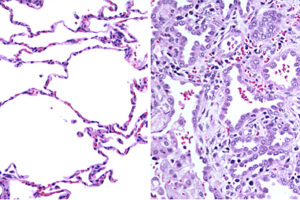
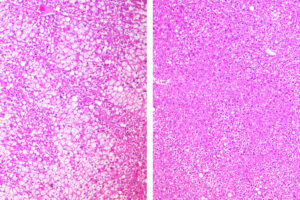
New research from Washington University School of Medicine in St. Louis has solved the medical mystery of why a 2-year-old child — seemingly healthy at birth — succumbed to an undiagnosed, rare illness. On the left is normal lung tissue showing air sacs with thin cell layers for the exchange of oxygen and carbon dioxide. On the right is the patient's lung tissue. Because of a mutation in the RAB5B gene, the walls of the air sacs are thick and unable to participate in gas transfer.

New research from Washington University School of Medicine in St. Louis has solved the medical mystery of why a 2-year-old child — seemingly healthy at birth — succumbed to an undiagnosed, rare illness. The research team identified a previously unknown genetic cause of interstitial lung disease, providing answers to the parents and doctors puzzled by […]

For children, young adults with recurrent AML, immunotherapy shows promise (Links to an external site)

Researchers at Washington University School of Medicine in St. Louis have shown, in a small clinical trial, that pre-activated natural killer cells can help some children and young adults with recurrent AML and few other treatment options. Pictured is Weston Robinett, 3, a patient who received this investigational therapy at Siteman Kids at St. Louis Children's Hospital and Washington University School of Medicine. He remains in remission more than two years after treatment.

An immunotherapy harnessing the immune system’s “natural killer” cells has proven effective in treating acute myeloid leukemia (AML) in some adults whose cancers return. Now, researchers at Washington University School of Medicine in St. Louis have shown, in a small clinical trial, that the same natural killer cells also can help some children and young […]

Hunstad to study receptors in UTI (Links to an external site)

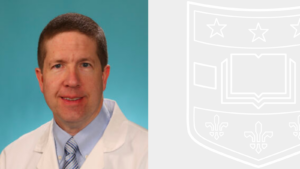
David Hunstad

David Alan Hunstad, MD, professor of pediatrics and of molecular microbiology at the School of Medicine, received a five-year $2 million grant from the National Institute of Allergy and Infectious Diseases of the National Institutes of Health (NIH) for research titled “Novel type 1 pilus receptors in pyelonephritis and recurrent UTI.”