Items

Magee Lab
Jeffrey Magee, MD, PhD
Division of Hematology & Oncology
Critical insights into causes of childhood leukemia and pioneering prevention strategies our lab investigates how leukemias arise from normal blood-forming stem cells, how malignant cells hijack developmental programs and why childhood and adult leukemias differ genetically. Using innovative mouse models we study leukemia evolution during early life and assess how stressors such as chemotherapy contribute to disease. Our goal is to develop new approaches to treat and ultimately prevent childhood leukemia.
Maurice J. Keller COPE Award – Preceptor
Presented annually to the outstanding preceptor who has served as an excellent role model and teacher of primary care.
Maurice J. Keller COPE Award – Resident
Presented annually to the outstanding resident who has shown enthusiasm, professionalism, and dedication to primary care.
Mavers Lab
Melissa Mavers, MD, PhD
Division of Hematology & Oncology
Advancing treatments for blood diseases through innovative cellular therapy research, our center focuses on immune regulation in hematopoietic stem cell transplantation and the development of novel platforms for cell-based therapies. By uncovering mechanisms of immune tolerance, enhancing regulatory immune cells to prevent graft-versus-host disease and designing safer cancer-targeting strategies, we aim to transform HSCT into a more effective and less toxic cure. Our bench-to-bedside approach drives breakthroughs that offer patients long, healthy lives.
McDonnell Pediatric Cancer Research Center
Children's Discovery Institute
Advancing research to transform outcomes for children with cancer, our center unites scientists and clinicians to tackle the leading cause of disease-related death among U.S. children. Despite progress in treatment, cancer still claims young lives and leaves survivors facing lifelong challenges such as hearing loss, learning difficulties, heart damage, infertility and secondary cancers. Through innovative basic and applied research, we strive to develop safer cures while reducing long-term complications.
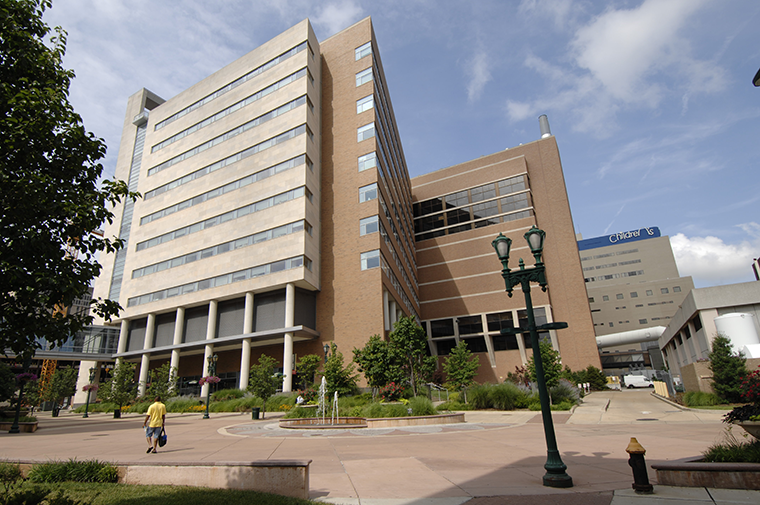
McDonnell Pediatric Research Building (MPRB)
The McDonnell Pediatric Research Building (MPRB) is an 11-story facility spanning 227,000 square feet. It features six floors of pediatric research laboratories, supporting both new programs and the expansion of existing ones. Common core facilities within the building serve more than 200 physician-scientists and trainees, fostering collaboration and innovation.
As a focal point for cutting-edge research into childhood diseases, the MPRB drives the application of basic science and technological discoveries to improve clinical care for children.
On the first floor, you’ll find the Farmstead Café—a rustic yet modern space offering locally sourced breakfast, coffee, soups, salads and sandwiches.
Medical alumni and development programs
Washington University is a destination for exceptionally bright and creative students across the globe. When you support scholarships, you help give all talented students, regardless of their financial means, the opportunity to experience a transformative WashU education.
Medical Biochemical Genetics Fellowship
Division of Genetics & Genomic Medicine
Offering a comprehensive and advanced educational experience, this one-year ACGME-accredited subspecialty program is designed for board-certified or board-eligible medical geneticists seeking expertise in managing children and adults with inborn errors of metabolism. It is ideal for those planning academic careers in medical genetics and genomics with a specific focus on metabolic disorders.
Medical Genetics and Genomics Program
Offering advanced training in medical genetics, this two-year ACGME-accredited program is designed for physicians who have completed a prior residency and seek a career in genetics. The program provides comprehensive clinical and academic preparation in partnership with WashU Medicine and St. Louis Children’s Hospital.