Items

Janowski Lab
Andrew Janowski, MD, MSCI
Division of Infectious Diseases
Focus on understanding disease mechanisms and mitigating ongoing pandemic risks our lab characterizes novel viruses to uncover how they cause disease in humans. While viral discovery has expanded known sequences many questions about viral biology require isolation and propagation in the lab. With human populations vulnerable to emerging pathogens we aim to advance knowledge that informs preparedness for future pandemics.
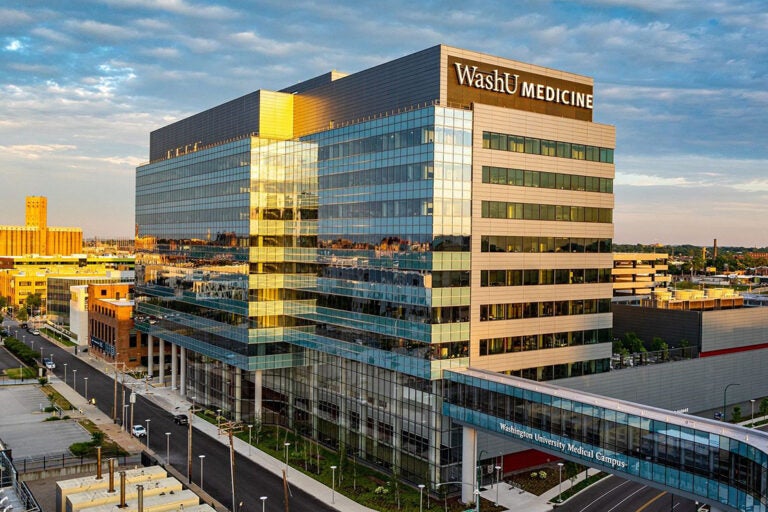
Jeffrey T. Fort Neuroscience Research Building
The Jeffrey T. Fort Neuroscience Research Building is a 11-story, 609,000-square-foot facility dedicated entirely to neuroscience. It brings together more than 120 research teams in a collaborative environment for discovery and training.
Opened on January 18, 2024, the building was named in honor of a generous gift from longtime supporter Jeffrey T. Fort. It is one of the largest neuroscience facilities in the nation.
Designed to foster collaboration, the building features shared research spaces, equipment rooms, and offices with views of the Medical Campus and downtown St. Louis. Amenities include a Kaldi’s coffee shop, rooftop terrace, and an adjacent 1,846-space parking garage.
The project achieved LEED Gold certification and integrates diversity, equity, and inclusion throughout its design and construction.
Joshua B. Rubin Lab
Joshua B. Rubin, MD, PhD
Division of Hematology & Oncology
Combining basic science and clinical research to advance brain tumor treatment, the Rubin Lab is dedicated to uncovering the mechanisms of tumorigenesis and therapy resistance in malignant brain cancers. Our work explores how factors such as epigenetics, signaling pathways, metabolism and cellular senescence influence disease progression, with a special focus on sex-specific differences in cancer risk and survival. By translating these insights into targeted strategies, we aim to develop more effective therapies and improve outcomes for diverse patient populations.
Kao Lab
Carol M. Kao, MD
Division of Infectious Diseases
Advancing understanding of vaccine effectiveness in diverse populations, the Kao Lab focuses on evaluating how vaccines perform in special groups to inform strategies that improve protection and public health outcomes. Led by Carol M. Kao, MD, MSCI, our team combines clinical insight with rigorous research to address critical questions in immunization and ensure equitable, evidence-based care.
Katira Lab
Bhushan Katira, MBBS
Division of Critical Care Medicine
Exploring novel mechanisms of lung injury during mechanical ventilation and critical care, the Katira Lab is dedicated to developing personalized strategies for respiratory support and lung protection in critically ill patients. Leveraging expertise in large animal models and advanced cardio-respiratory tools such as electrical impedance tomography, we translate cutting-edge research into approaches that improve outcomes and redefine standards of care.
Lactation Room Program
Supporting breastfeeding families across the medical campus
Promoting health and reducing barriers, the Lactation Room Program provides secure, private spaces for students, faculty, staff, trainees and visitors who breastfeed. Established in 2014 by WashU Medicine and Barnes-Jewish Hospital, the program raises awareness of breastfeeding’s importance while fostering a workplace culture that values new mothers and infant wellness.
Leadership Development Program
Cultivating leadership for lasting impact
Empowering faculty and staff to lead with confidence we provide structured programs that build essential skills for collaboration, decision-making and organizational growth. Our goal is to strengthen leadership capacity across the WashU Medicine community.
Liss Lab
Kim Hung Ho Liss, MD
Division of Gastroenterology, Hepatology & Nutrition
Childhood liver disease; liver transplantation; nonalcoholic fatty liver disease; ischemia-reperfusion injury
Lowe Lab
Mark E. Lowe, MD, PhD
Division of Gastroenterology, Hepatology & Nutrition
Dietary fat digestion and mechanisms of chronic pancreatitis.
Luke-Pak-Silverman Lab
Clifford J. Luke, PhD
Stephen C. Pak, PhD
Gary A. Silverman, MD, PhD
Division of Newborn Medicine
Investigating the role of serpins in maintaining cellular balance and understanding rare genetic disorders, our lab explores how disruptions in protease-serpin interactions contribute to disease. By studying mechanisms of cell stress, protease activity and serpin blockade, we aim to uncover pathways that lead to tissue damage and dysfunction. Our work includes modeling variants of uncertain significance through the Undiagnosed Diseases Network to advance diagnosis and therapeutic strategies for conditions such as alpha-1 antitrypsin deficiency and other serpinopathies.
Luke research profile
Pak research profile
Silverman research profile